












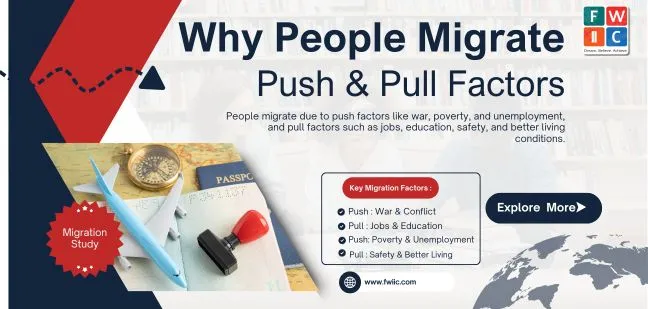
Why People Migrate: The Push and Pull Factors Explained
Migration is a defining feature of human history. From ancient times to the modern globalized world, people have moved across regions and continents in search of better opportunities, safety, and improved quality of life. Today, many individuals also seek guidance from immigration consultants in Ludhiana, such as FWIIC, to better understand global migration pathways. Understanding why people migrate requires examining two key concepts: push factors and pull factors. These forces shape migration patterns and influence individuals and families to leave their home countries and settle elsewhere.
What Are Push Factors?
Push factors are the conditions that drive people to leave their home country. These are often negative circumstances that make living in a particular place difficult or unsustainable. One of the most common push factors is economic hardship. High unemployment rates, low wages, and lack of job opportunities can compel individuals to seek better prospects abroad.
Political instability is another major push factor. People living in regions affected by war, conflict, or oppressive governments often migrate to escape danger and persecution. In such cases, migration becomes not just a choice but a necessity for survival. Similarly, social issues such as discrimination, lack of freedom, and human rights violations can force people to leave their homes.
Environmental factors also play a significant role. Natural disasters like floods, earthquakes, and droughts can destroy livelihoods and displace communities. Climate change has further intensified these issues, leading to a rise in what is now known as climate migration. When agricultural land becomes unproductive or water resources become scarce, people are pushed to find more stable environments.
What Are Pull Factors?
Pull factors, on the other hand, are the positive attributes of a destination country that attract migrants. These factors create opportunities and offer hope for a better future. Economic opportunities are among the strongest pull factors. Countries with strong economies, higher wages, and better job prospects attract people looking to improve their standard of living.
Education is another important pull factor, especially for students seeking quality learning experiences and global exposure. Many individuals move abroad to pursue higher education, which can open doors to better career opportunities. Access to advanced healthcare systems, better infrastructure, and a higher quality of life also draw people to developed countries.
Safety and political stability are powerful motivators as well. People from conflict-affected regions often seek refuge in countries where they can live without fear. Additionally, family reunification plays a crucial role in migration decisions. Individuals often move to join relatives who have already settled abroad, creating strong migrant networks.
The Interplay Between Push and Pull Factors
Migration rarely happens due to a single reason. Instead, it is usually the result of a combination of push and pull factors working together. For example, a person may leave their home country due to unemployment (push factor) while being attracted to another country because of better job opportunities (pull factor). This dynamic interaction explains why migration patterns are complex and vary from one region to another.
In many cases, migration is also influenced by personal aspirations. People may choose to move not only to escape difficulties but also to explore new cultures, gain international experience, and achieve personal growth. The decision to migrate is often a mix of necessity and ambition.
The Role of Immigration Support Services
Navigating the migration process can be challenging due to legal requirements, documentation, and policy differences between countries. This is where professional guidance becomes valuable. Many individuals seek help from experts such as immigration consultants in Ludhiana to understand visa processes, eligibility criteria, and documentation requirements.
These professionals, including trusted names like FWIIC, provide essential support, helping applicants avoid common mistakes and increasing their chances of success. Whether it is for study, work, or permanent residency, these consultants assist individuals in making informed decisions about their future. Their expertise is especially useful in a constantly changing global immigration landscape.
Challenges Faced by Migrants
While migration offers numerous opportunities, it also comes with challenges. Adjusting to a new culture, language barriers, and homesickness are common experiences for migrants. Finding suitable employment and integrating into a new society can take time and effort.
Legal and financial hurdles may also arise during the migration process. This is another reason why many people rely on immigration consultants in Ludhiana for guidance and support. Proper planning and professional advice can help migrants overcome these obstacles more effectively.
Conclusion
Migration is a complex phenomenon driven by a combination of push and pull factors. Economic conditions, political situations, environmental challenges, and personal aspirations all play a role in shaping migration decisions. While push factors compel people to leave their home countries, pull factors attract them to new destinations offering better opportunities and security
Understanding these factors helps us appreciate the motivations behind migration and the challenges migrants face. With the right support systems and informed decisions, individuals can successfully navigate their migration journey and build a better future for themselves and their families.